Battery Energy Storage Systems (BESS) are becoming an increasingly important part of the UK’s energy infrastructure. Across the country, developments are being planned to support renewable generation, balance electricity demand and strengthen energy resilience.
The scale of that growth is significant. Ofgem’s January 2026 report recorded grid battery storage capacity of 6.8 GW in 2025, with the Clean Power 2030 plan calling for 23–27 GW by 2030. That expansion brings a growing need to protect the infrastructure being delivered.
At Lochrin Bain, we believe this raises an important question: is perimeter security being designed with the same joined-up thinking as the electrical infrastructure behind it?
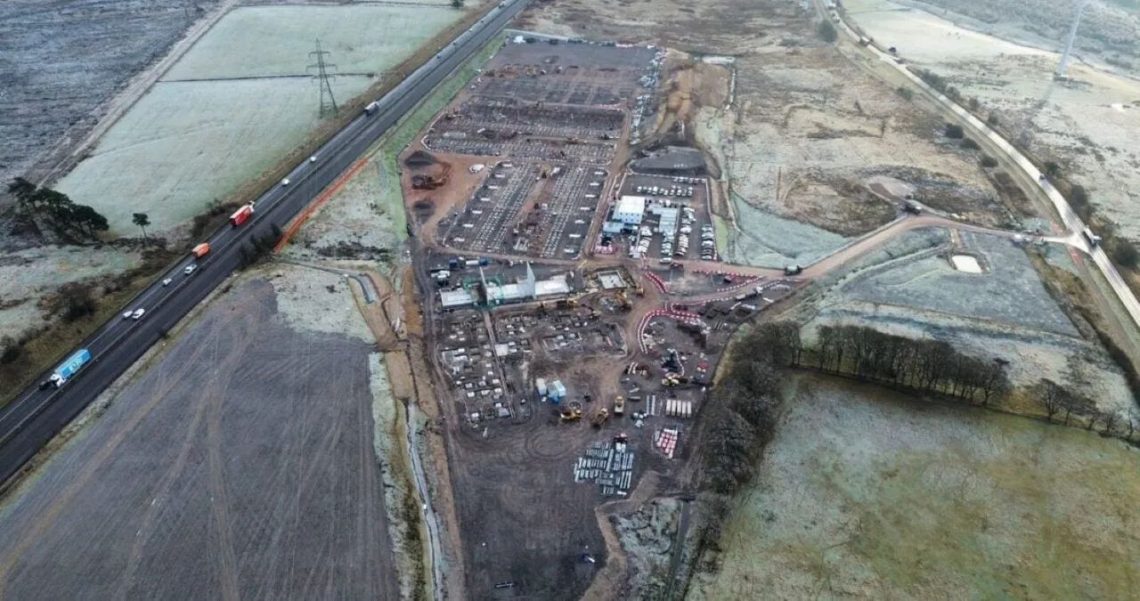
Connected infrastructure needs coordinated protection
BESS developments are often located close to substations and other energy infrastructure, with proximity to the grid connection influencing site selection. Scottish Government planning guidance recognises this relationship, alongside the need for perimeter fencing, CCTV and measures to prevent unauthorised access.
Not every BESS development is designated Critical National Infrastructure (CNI). However, where a development connects into or sits alongside critical energy assets, its security should be considered in that wider context.
Different ownership, separate construction packages and individual site boundaries must not leave gaps in the overall security strategy.
A robust substation perimeter does not, by itself, resolve the risks associated with an adjoining development. Shared boundaries, access arrangements and the interfaces between compounds all need coordinated consideration.
A fence specification is only the starting point
A description such as “2.4-metre security Palisade fencing” identifies a type of boundary. It does not establish how that boundary should perform against a defined threat.
Effective design needs to answer practical questions:
- What threats must the perimeter address?
- What independently verified resistance is required from the fencing and gates?
- How will intrusion be detected and verified?
- Who will respond, and how does the physical protection support that response?
- Who takes responsibility for security where the BESS and network operator’s boundaries meet?
NPSA guidance treats deterrence, detection and delay as complementary elements of perimeter protection. It also makes clear that intrusion detection systems do not themselves provide physical delay: that function comes from the barrier. Specifying these elements separately risks leaving a gap between detecting an incident and being able to respond.
A joined-up approach, proportionate to the risk
We are not suggesting every BESS development needs an identical fence or the highest available security rating.
We are calling for a consistent design process: an early, site-specific risk assessment, clear responsibility for security interfaces, and a coordinated specification covering fencing, gates, detection, monitoring and response.
Where independently certified protection is required, the specification should identify the appropriate performance level and ensure the complete installation follows the certified system’s requirements.
Security should also remain part of the discussion through procurement and construction. Changes to gates, layouts or boundary details need to be assessed against the original security objectives.
The expansion of battery storage is an opportunity to strengthen the UK’s energy resilience. Its physical protection should support that ambition from the outset.
Developers, network operators, security consultants and contractors need to agree the security strategy early, before layouts and procurement decisions become difficult to change.
At Lochrin Bain, we work with project teams to develop perimeter fencing and gate solutions suited to the asset, the location and the assessed threat.
If you are designing a BESS development, particularly alongside critical energy infrastructure, speak to our team about bringing perimeter security into the conversation early.
Back to Blog